Traditional Bamboo Fish Trap in Bangladesh: The Art of Sustainable Chai Fishing
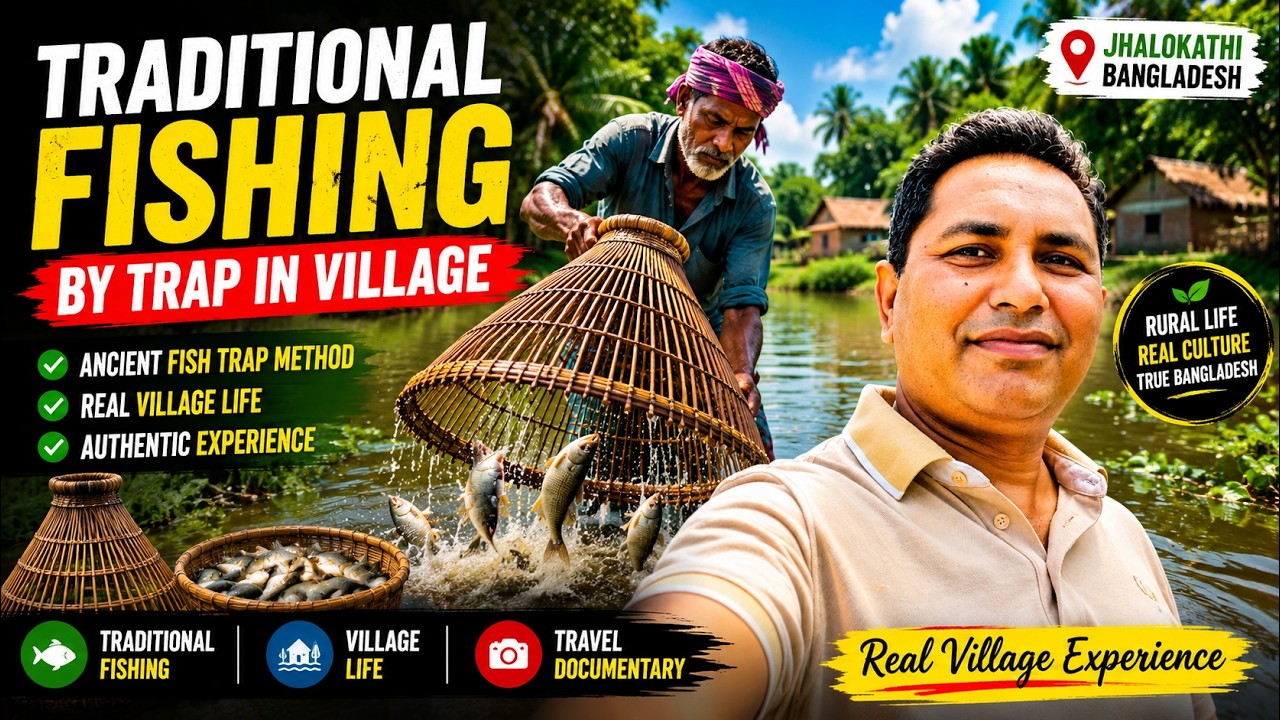
Introduction to Bangladesh's Ancient Riverine Fishing Heritage
In the vast, interconnected riverine landscape of Bangladesh, fishing is not merely a common occupation or a leisurely hobby—it is an ancient, deeply spiritual way of life intricately intertwined with the country's unique geographical identity. For untold centuries, the resourceful rural communities of this tropical delta have developed ingenious, highly sustainable, and completely eco-friendly methods to harvest nature's bounty without disrupting delicate aquatic ecosystems. One of the most fascinating, structurally brilliant traditional tools utilized across local villages is the handmade ancestral bamboo fish trap, historically and affectionately referred to by locals as the "Chai" (চাই).
For international eco-tourists, cultural anthropologists, geography researchers, and slow-travel enthusiasts exploring the true heart of Bengal, witnessing local villagers—including highly skilled village women—setting up these intricate bamboo structures along flowing currents offers an enchanting glimpse into sustainable grassroots living. This practice beautifully showcases how local communities thrive in complete harmony with the rhythms of water. Let’s dive deep into the micro-mechanics, cultural heritage, and timeless lifestyle surrounding traditional bamboo trap fishing in Bangladesh.
The Craftsmanship Behind the "Chai" (Traditional Bamboo Trap)
The Bangladeshi Chai stands out as a magnificent testament to ancient grassroots engineering and sustainable design. Meticulously handcrafted by dedicated elder artisans in rural cottage industries, each trap is built using nothing but finely sliced green bamboo splits, seasoned reeds, and ultra-flexible natural cane or jute strings. What makes the Chai an absolute masterpiece of rural fluid mechanics is its complex, one-way funnel entry system:
- The Non-Return Geometry: The outer lattice allows flowing water and passing schools of small native fish to glide inside effortlessly through narrow, flexible openings. However, once inside the inner chamber, the sharp, inward-pointing bamboo tips completely block any possible exit.
- Zero Environmental Footprint: Because this traditional method relies entirely on organic forest materials, it utilizes absolutely zero microplastics, chemical nylon nets, or heavy machinery. It leaves the riverbed pristine and pollution-free.
- Selective Harvesting: The spacing between the hand-woven bamboo splits is systematically calculated to let microscopic juvenile fish and fingerlings escape back into the wild, preventing overfishing and ensuring long-term ecological balance.
How Villagers Master the Hunt: Catching Puti Fish in Rivers and Creeks
Successfully trapping native small fish varieties like the silver-scaled Puti Fish (পুঁটি মাছ), Darkina, and Mola in local canals, shallow swamp channels, or waterlogged monsoon paddy fields demands immense patience, keen observation, and an inherited mastery of hydro-dynamics. First, the artisan locates strategic choke points—such as narrow river bends, natural creek bottlenecks, or openings in low-lying bamboo dams where fish instinctively navigate during high and low tides.
To keep the lightweight traps from drifting away in the active currents, villagers secure them deep into the soft riverbed mud using sturdy bamboo stakes. They then implement natural camouflage, packing the outer frames with local aquatic weeds, floating water hyacinths, or wild grass so they blend seamlessly into the underwater riverine environment. After leaving the setup submerged overnight, the family returns at dawn. Lifting the heavy Chai out of the misty water reveals a splashing, shimmering harvest of fresh, organic local fish, ready to be immediately prepared into an authentic, fire-cooked rural delicacy.
The Vital Role of Village Women in the Grassroots Economy
One of the most inspiring and beautiful dimensions of rural life in the delta is the active, leading role that village women play in managing everyday agricultural and wild fishing activities. Far from being passive observers, these resilient women possess a deep understanding of river currents and seasonal fish movements. Their flawless precision in handling household livestock, foraging for wild medicinal greens along the banks, and systematically placing riverine traps serves as the backbone of self-sufficient grassroots economies across Bengal. Documenting their daily work shines a vital spotlight on the true, unheralded guardians of South Asian rural heritage.
🎬 Watch the Full Grassroots Fishing Documentary
Before planning your heritage tour, we highly recommend watching our detailed grassroots travel vlog. Turn up your volume to hear the peaceful sounds of splashing river water and see the exact manual process of setting up and harvesting the traditional Chai live:
Experience the Authentic Village Traditions of Bangladesh
If you are an international content creator, professional documentary filmmaker, culinary researcher, or high-end travel photographer looking to capture vanishing survival skills, unique riverine ecosystems, and the genuine warmth of rural hospitality, traveling alongside an accredited, government-licensed expert is the key to discovering untamed authenticity safely.
🌍 ECO-TOURISM & MEDIA FIXER SUPPORT IN BANGLADESH
Md. Mamun Ul Hsasn Shawn
Govt. Registered Tour Guide | Tour Operator
Reg. No.: TG501002000001
Bangladesh Tourism Board (Ministry of Civil Aviation and Tourism)
Through Soily Tourism, we specialize in curating deep-access agricultural eco-tours, traditional street food walks, historical expeditions, and high-end media fixer services for international creators, journalists, and travelers worldwide.
- Traditional Riverine Fishing Tours & Native Catch Adventures
- Rural Lifestyle Photography Trails & Artisan Craft Workshops
- Professional Media Fixer Logistics & Unscripted Location Scouting
Follow Our Journeys:
Official Brand: @SoilyTourism | Personal Profile: mamunul.hsasn
YouTube Channel: @MyJourneyBD
📍 Specialized Services available across all major riverine networks and heritage hotspots in Bangladesh.


Comments
Post a Comment
Welcome to My Journey BD! Feel free to share your thoughts, travel questions, or food experiences below. Keep it friendly and respectful!