The Art of the Bothiyal: Exploring Bangladesh's Master Fish Cutters and the Traditional Boti
Introduction to Bengal's Vibrant Riverine Wet Markets
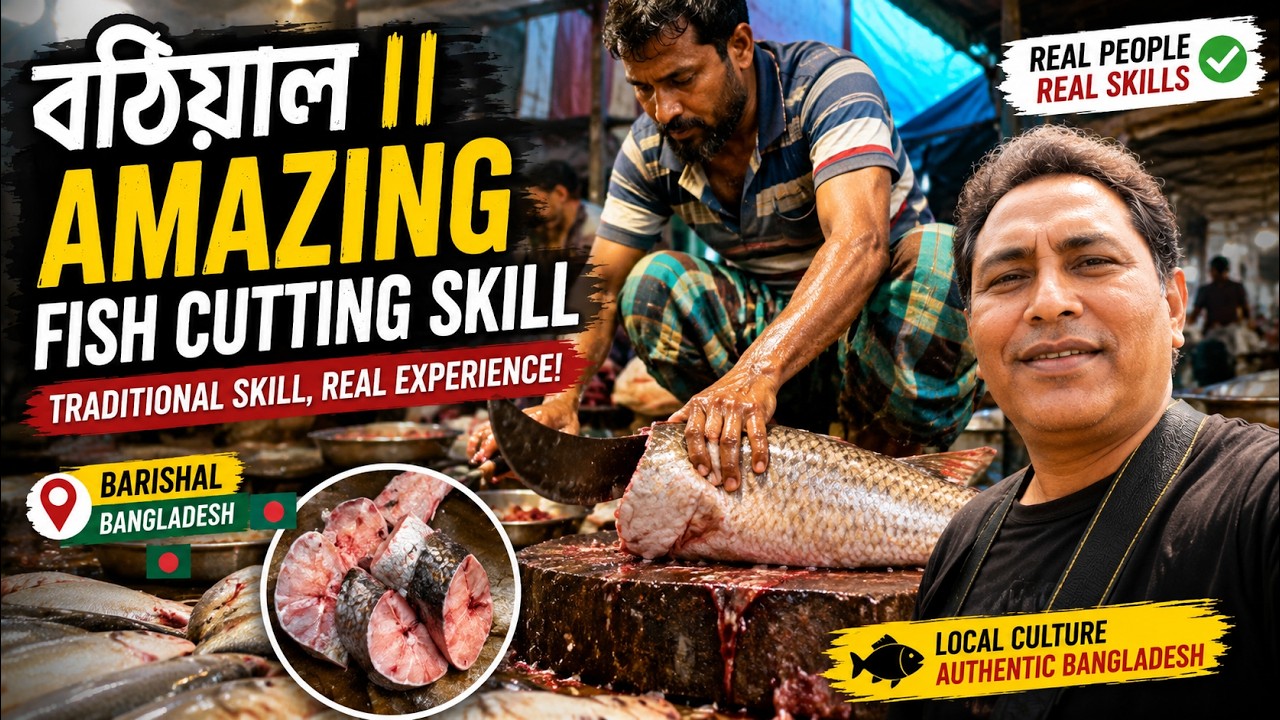
For any global traveler, cultural enthusiast, or culinary explorer venturing into the tropical delta of Bangladesh, a morning visit to a local fish market (Macher Bazar) is an unforgettable, high-energy assault on the senses. In a fertile country intersected by hundreds of active rivers, distributaries, and expansive wetlands, fish is infinitely more than just an everyday dietary protein—it is a complete lifestyle, a celebrated cultural identity, and a profound culinary passion. Amidst the lively chaos, shouting vendors, and shimmering rows of fresh catches, you will witness an extraordinary display of speed, rhythm, and structural engineering: the ancient art of the Bothiyal (বঠিয়াল), the master fish cutters of Bengal.
Unlike Western or East Asian culinary traditions that rely almost entirely on specialized moving butcher knives, heavy cleavers, or flexible filleting blades, Bangladeshi kitchens and wet markets depend on a unique, fixed curved blade system known as the Boti (বঁটি). The specialized artisans who spend decades mastering this tool display spatial awareness and manual swiftness that easily rival the finest Michelin-starred sashimi chefs in Tokyo or master fish butchers across Europe. Let’s dive deep into the fascinating mechanics, ancestral geometry, and cultural value of this living street craft.
What is a Bothiyal? The Guardians of the Boti Blade
The respected term Bothiyal refers specifically to the professional, highly localized fish butchers stationed permanently at bustling city markets, village bazaars, and maritime river ports. Sitting balanced and low on a raised wooden bench or platform, they expertly secure the heavy horizontal wooden or iron base of the Boti using the weight of their foot or knee. This leaves both hands entirely free to manipulate, rotate, and glide heavy freshwater carps (Rui, Katla), massive predatory catfishes, or the delicate, silver-scaled national prize—the Hilsa (Ilish).
What would take an uninitiated amateur hours of messy labor to clean, scale, gut, and portion, a professional Bothiyal effortlessly transforms into a collection of uniform steaks in a matter of seconds. Their work is a flawless masterclass in human kinetic efficiency, completed under pressure before crowds of demanding daily shoppers.
The Kinetic Geometry of Bengali Fish Butchery
Watching a veteran Bothiyal dissect a complex catch is akin to observing a tightly choreographed live theatrical performance. Every single motion of the fish against the static blade is executed with calculated mechanical intent, split into rapid, continuous phases:
- Lightning-Fast Descaling: Utilizing either a specialized textured scaling tool or the thick, blunt upper spine of the Boti blade, armor-like scales fly off in a seamless wave without ever tearing or damaging the incredibly delicate flesh underneath.
- Surgical Fin and Gill Extraction: With a single, fluid flick of the wrist against the razor-sharp tip, tough pectoral fins, dorsal ridges, and internal gill arches are cleanly cut away with minimal waste.
- The Uniform Steak Cut (Garda): Whether slicing precise bone-in transverse steaks tailored perfectly for traditional rich mustard curries (Shorshe Ilish) or separating clean, pristine fillets, every single portion is cut to a mathematically uniform thickness. This ensures even heat distribution during the cooking process.
Culinary Tourism and Immersive Wet Market Trails
Experiencing the unedited, raw energy of these riverine fish markets, filming the incredible agility of traditional fish artisans, and safely tasting legendary regional river recipes demands genuine local insight and seasoned logistical coordination. Navigating these highly packed, fast-moving wet markets independently can be overwhelming for international media crews and culinary travelers who want to document the craft respectfully without disrupting the local commerce.
🎬 Watch the Master Fish Cutters Live in Action
Before mapping out your specialized culinary production or holiday trail, immerse yourself in our viral high-definition documentary short. Turn up your volume to hear the ambient roar of the fish market and witness the stunning, split-second precision of the Bothiyal live:
Partner with a Registered Expert for Culinary Travel & Media Fixer Services
Whether you are an international food vlogger looking to capture the ultimate street-side seafood processing video, an anthropologist researching South Asian culinary history, or a specialized chef tracking river-to-table traditions, travelling with an accredited, government-registered professional guide ensures unparalleled back-alley access, authentic translations, and absolute safety.
🌍 CULINARY HERITAGE TOURS & MEDIA FIXER SUPPORT IN BANGLADESH
Md. Mamun Ul Hsasn Shawn
Govt. Registered Tour Guide | Tour Operator
Reg. No.: TG501002000001
Bangladesh Tourism Board (Ministry of Civil Aviation and Tourism)
Through Soily Tourism, we specialize in curating deep-access agricultural eco-tours, traditional street food walks, historical expeditions, and high-end media fixer services for international creators, journalists, and travelers worldwide.
- Traditional Fish Market (Macher Bazar) Culinary Trails & River Port Photo Walks
- Deep-Access Gastronomy Expeditions (Hilsa Processing & Rural Seafood Preparation)
- Professional Media Fixer Support, Gear Logistics, Permits, and Location Management
Follow Our Journeys:
Official Brand: @SoilyTourism | Personal Profile: mamunul.hsasn
YouTube Channel: @MyJourneyBD
📍 Premium Gastronomy Services available across Dhaka, Chandpur, Barishal, and all vital river ports of Bangladesh.


Comments
Post a Comment
Welcome to My Journey BD! Feel free to share your thoughts, travel questions, or food experiences below. Keep it friendly and respectful!